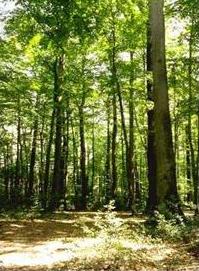
Credits: JM Gion, CIRAD |
Introduction
Forest covers 26.6%
of the earth’s land surface, and is constantly diminishing due to
agricultural pressure, especially in tropical zones. Accounting for 2%
of the world’s gross domestic product, forestry is the world’s fifth
most important economic sector, with wood pulp, paper and lumber
industries representing 60% of the market. Wood is also a source of
renewable natural energy and constitutes a major carbon dioxide
sink. In 1995 it was estimated that 75% of industrial wood was
produced by " natural forests ", and 25% came from
industrial plantation. During the next decades, the increase in the
population (8 million people in 2020) should lead to a major increase
in demand for wood (+25% between now and 2010, data from the FAO),
especially in developing countries. In order to avoid abusive
exploitation, the following recommendations were set forth at the
Earth Summit in Rio de Janeiro in 1992 :
- Reduction of the contribution of natural forests by 30%
- Increase of 40% in the contribution from industrial tree
plantations and from recycling.
These statistics clearly indicate the necessity of
increasing the production of wood by dedicated industrial tree
plantations, while trying to avoid the pressure exerted on old growth
forests. An increase in productivity requires the adoption of
optimized forestry practices, as well as the development of
genetically improved varieties. Forest species are still only slightly
domesticated; they exhibit high genetic diversity and considerable
progress can be expected during the first cycles of selection. Thus,
with the increasing need for wood by industry and society, cultivated
forests will have a more and more important economic role to
play. However, in a changing world, production goals should take the
rapid evolution of the economy into account (demand for quality raw
materials) as well as the expected environmental changes (global
change). Thus it is not only a matter of adopting a simple
productivist plan for our temperate forests, but we must take other
factors into account in order to ensure their perpetuity. Ensuring the
quality of the raw materials and the adaptation of trees to the
environment which produces them constitute two important criteria for
the sustainability and multifunctionality of forest ecosystems which
were enunciated at three inter-ministerial conferences on the
protection of European forests (Strasbourg 1990; Helsinki, 1993;
Lisbon, 1998).
The activities undertaken involving the various
species of the ForEST project integrate into these international
engagements and endeavor, to develop two research themes: quality of
wood and adaptation to the environment. Since sustainable management
of forests requires a knowledge of the molecular and physiological
mechanisms of tree functioning, the scientific goal of our project is
to identify the genes of ecologic and economic interest to better
manage forest genetic resources and to enhance their
value. Concretely, this means utilization of molecular tools in the
context of improvement programmes for the exploitation of genetic
resources, and in the context of conservation programmes for the
management of genetic resources.
OAK: Evaluation of the genetic diversity of the
genes implicated in the adaptation of trees to their
environment
The sessile and pedunculate oaks are the two most
important species of deciduous trees in Europe in terms of forest
surface cover and in terms of economics (wood resources). These two
species are sympatric but occupy different ecological niches: the
pedunculate oak grows in humid areas which are rich in minerals and
can withstand high moisture content of the soil, but is very sensitive
to drought, whereas the sessile oak requires drier soil which has
better drainage and is less rich in minerals.
The environmental constraints sustained by our temperate forests are principally linked to climactic factors (drought, wind, fire). They will be amplified during the next decades by global warming. These modifications will generate selection pressures which will affect their adaptation to an environment with less water. The availability of water is the principal limiting factor for growth and even survival of trees. Furthermore, the predicted climate changes are characterized by modifications in the length of the growing seasons (the date of vegetative bud break is dependent on this). In particular, an increase in the length of the growing season will make trees more sensitive to climactic factors (early or late frost). In this context it is urgent to understand the response and adaptation capacities of the trees to these brutal changes. We propose to contribute to answering these questions by using the tools of functional genomics (transcriptome, proteome, genetic mapping and detection of QTL, association studies in natural populations), taking the genetic diversity of oak trees into account. The approach that we plan to use relies on competency in genetics (molecular, quantitative and population) at the BIOGECO mixed unit research, as well as a collaboration with ecophysiologists from INRA in Nancy (UMR Ecologie et Ecophysiologie Forestière).
|





 home |
overview |
resources |
sequencing |
news |
press releases |
site |
Legal information

