 |
 |
 |
 |
 |
|---|


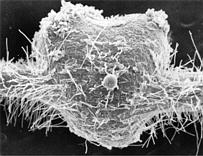
Alnus glutinosa and Casuarina glauca
EST library
The recent genome sequencing of three Frankia strains, done by the Genoscope, the Ecologie Microbienne Unit in Lyon and a consortium of American groups (JGI/DoE, Universities) permitted to highlight marked size differences correlated to host spectrum, an absence of symbiotic island and a lack of canonical nod cluster (Normand et al., 2007). Work is going on to identify events that take place in the bacterium during infection. On the plant side, there is still little known about the symbiotic mechanisms involved except for the conservation of some determinants controlling infection of actinorhizal plants by Frankia and the infection of Legumes by Rhizobium (Svistoonoff et coll., 2004). The objective of our project is to constitute databases of expressed genes (ESTs) of a significant size from Casuarina and Alder during the course of symbiotic interaction with Frankia, and to compare these genetic programmes to those of non-infected control roots. This genomic approach should in the coming years yield a global view of the workings of actinorhizal nodules. A comparative analysis of transcriptomes of actinorhizal and legumes should also help understand the nature of genes that predispose actinorhizal plants and legumes to develop nitrogen-fixing root nodules.
Contacts: |
 home |
overview |
resources |
sequencing |
news |
press releases |
site |
Legal information
webmaster@genoscope.cns.fr

