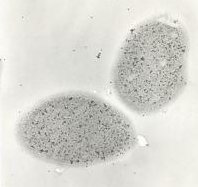
TEM image (75000x) of
Methylobacterium dichloromethanicum DM4 growing with dichloromethane (DCM), immunolabelled using the protein A-gold technique with a DCM dehalogenase specific antibody, and showing the cytoplasmic localization of this biodegradative enzyme, whose expression is induced by DCM (cliché R. Hermann). | |
Microbes growing on
one-carbon compounds have long captured the interest of
scientists. How do these organisms make multi-carbon compounds from
molecules without C-C bonds? Among those, aerobic
alpha-proteobacteria of the Methylobacterium genus have been
much favoured objects of investigation, as much for their distinctive
red colour as for their intriguing core metabolic pathways that
feature both bacterial - and archaeal - like genes, their ability to
escape the toxicity of formaldehyde as a key metabolic intermediate,
and the promise of making organic molecules of biotechnological value
from low-cost materials such as methanol.
A first complete genome sequence of the reference
strain of the Methylobacterium genus, M. extorquens AM1 has now been
completed in the US American partner laboratory (Chistoserdova et al.,
2003).
The specific interest in sequencing the genome of a
pollutant-resistant bacterium of the same genus is to drive forward
detailed investigations of the genomic basis of biological adaptations
to toxic halogenated organic compounds. In microorganisms, these
adaptations feature two main aspects:
- the ability to degrade toxic compounds, often used by the
corresponding microorganisms as sole source of a life-essential
element for growth, and/or
- the ability to withstand high concentrations of toxic
compounds, e.g. through membrane strengthening and/or compound
excretion, or inactivation.
Several well characterised Methylobacterium
species grow with halogenated methanes (i.e. dichloromethane or
chloromethane) as the sole carbon source. The dichloromethane
degrading strain Methylobacterium dichloromethanicum DM4
whose genome has now been sequenced was isolated from soil from a
treatment plant for halogenated hydrocarbon waste in the late
seventies, following the inclusion of dichloromethane in the first
list of priority pollutant by the EPA. It has now been investigated
intensively at the physiological, enzymatic and genetic level for more
than two decades (Vuilleumier, 2002). Strain DM4 provides an
attractive paradigm, stripped down to its bare essentials (one carbon
and one or two halogen substituents), for addressing many aspects of
microbial degradation of halogenated toxic organic compounds. Do
specific membrane proteins for pollutant transport in and out of the
microbial cell exist? How is the hydrochloric acid produced
intracellularly during the degradation of halogenated pollutants
excreted? Do microorganisms that degrade genotoxic halogenated organic
compounds feature adaptations of their DNA repair machinery?
The availability of the genome sequence of the DM4
strain, and its comparison to the available sequence of the
Methylobacterium type strain which is unable to degrade
dichloromethane, should provide new elements of answers to these and
other related questions, and thus bears the promise of yielding
significant new findings on the adaptations of microbes to pollutants
at the genetic level.
|





 home |
overview |
resources |
sequencing |
news |
press releases |
site |
Legal information

