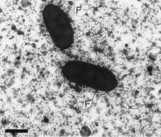
Fig 1: Transmission electron micrograph of Azospirillum lipoferum 4B grown in liquid culture. (F, polar flagellum; bar, 1 µm).
Source: Alexandre et al. 1999, Applied Environmental Microbiology, 65, 7401. |
Azospirillum is a Gram negative motile
bacteria belonging to the order Rhodospirillales, associated
with roots of monocots, including important crops, such as wheat, corn
and rice. Both in greenhouse and in field trials, several strains of
Azospirillum were shown to exert beneficial effects on plant
growth and crop yields, under various soil and climatic conditions,
and are thus qualified as Plant Growth-Promoting Rhizobacteria
(PGPR).
Actually, Azospirillum is the primary
commercial phytostimulator inoculant for cereals worldwide. For
instance, up to one million hectares of maize are successfully
bio-fertilized with Azospirillum in Mexico. In the context of
sustainable agriculture, plant inoculation with Azospirillum
is a good alternative to reduce chemical inputs.
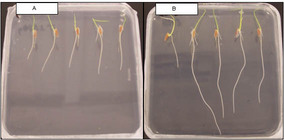
Fig 2: Effect of Azospirillum lipoferum inoculation on rice root morphology.
(A) uninoculated control; (B) rice inoculated with a strain of A. lipoferum.
Source: UMR-CNRS 5557 Centre d'Ecologie Microbienne. |
Azospirillum can establish an associative
symbiosis with cereals but unlike mutualistic symbiosis (such as
rhizobia with leguminous plants), the association is not accompanied
by the formation of new organs. Azospirillum benefits the
plant directly, via associative nitrogen fixation, synthesis of
phytohormones (notably indole-3-acetic acid, IAA), and modulation of
plant hormonal balance by deamination of the ethylene precursor
1-aminocyclopropane-1-carboxylate (ACC). These traits may lead to
enhanced root system branching and root elongation, which in turn will
favour the uptake of soil water and minerals (Fig. 2). The
establishment of the associative symbiosis between
Azospirillum PGPR and the plant starts at a very early stage,
i.e. during bacterial colonization of germinating seeds.
Two species of Azospirillum were initially
described in 1978: A. brasilense and
A. lipoferum. Eleven species have now been described. The
majority of the studies on Azospirillum, notably on
plant-beneficial properties, have been performed on Azospirillum
brasilense where implementation of genetics is easier than in
Azospirillum lipoferum. Genome sequencing of a strain of
A. brasilense isolated from wheat is ongoing at the
University of Tennessee and Oak Ridge National Laboratory (USA) by the
team of Igor B. Zhulin (supported by the US National Science
Foundation grant EF-0412186). In order to perform comparative
genomics, the project ongoing in Genoscope was focused on strain 4B of
Azospirillum lipoferum species.
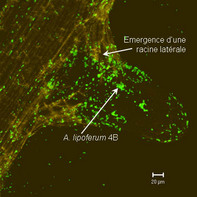
Fig 3: Colonization of rice root by A. lipoferum 4B labelled with EGFP, analyzed by confocal laser scanning microscopy.
Source: UMR-CNRS 5557 Centre d'Ecologie Microbienne. |
Azospirillum lipoferum 4B has been isolated
from a rice field of Camargue (South of France) in 1982 and has been
studied for its high efficiency in nitrogen fixation and for its
successful properties of rice colonization (Fig. 3) and growth
promotion. Next to its potential use in agronomy, Azospirillum
lipoferum 4B displays interesting features such as the presence
of an inducible prophage and occurrence of phase variation, an
adaptive process generating intrapopulation diversity and important in
niche adaptation or to escape host defenses. Usually, variants
spontaneously emerge from the wild-type at a frequency of 10-4 to 10-3
per cell per generation in vitro. Moreover, the strain
A. lipoferum 4T, an atypical non-motile laccase-positive
isolate of A. lipoferum isolated simultaneously and from the
same rice rhizsophere than A. lipoferum 4B, is likely to be
the variant form generated within the soil ecosystem. Recently, phase
variation was shown to be accompanied by major genome rearrangements,
with the loss of a 750-kb plasmid, both in the variant and in
A. lipoferum 4T. This genome plasticity raises numerous
questions about microevolution of Azospirillum in a
fluctuating environment like soil.
|





 home |
overview |
resources |
sequencing |
news |
press releases |
site |
Legal information

