| -> Access to sequencing project |
|
Collaboration
 INRA
Centre de Recherches de Clermont-Theix
Unité de Recherches sur la Viande
Saint-Genès-Champanelle, France
|
|
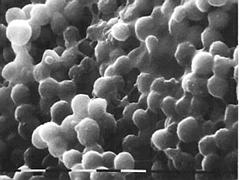
Photo 3: Biofilm formed by Staphylococcus xylosus (Environmental microscope, scale: 2 µm) (photo INRA) |
Staphylococcus
xylosus is a Gram positive bacterium with a low G + C
content. It belongs to the coagulase-negative group of
staphylococci. It is a commensal bacterium of the skin which is of
major interest for several reasons.
This bacterium is used as a fermenting agent in the production of meat
(sausage) and milk (cheese) products. It contributes to the
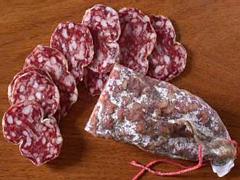
development of the red color characteristic of sausages through its
nitrate reductase activity (photo 1) and to the orange color on the
surface of certain cheeses, since some strains of S. xylosus are
pigmented (photo 2).
Photo
1: Sausage inoculated with Staphylococcus xylosus (photo INRA) |
This bacterium is mentioned as a dominant species in production
facilities. Some strains of S. xylosus are capable of colonizing
surfaces by forming biofilms (photo 3).
There is a great diversity of strains within this species. As a
result of this diversity, certain strains isolated from milk and raw
ham produce enterotoxins D, C or E, and as such may present a risk
for the consumer. Other strains of S. xylosus are opportunistic
pathogens of animals. Strains of S. xylosus, some of which have been
isolated in nosocomial infections, have been described as
multi-resistant to diverse antibiotics.
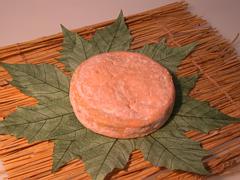
Photo 2: Munster cheese inoculated witn Staphylococcus xylosus on the surface (photo INRA) |
The genome of S. xylosus is estimated at 2.8 Mb. The complete sequence of this genome will lead to the establishment of the genetic bases of the specific properties of this species in comparison with the genomes of other staphylococci: S. aureus, S. epidermididis and S. carnosus. It will also make it possible to identify the genetic bases for the adaptation of this bacterium to the agro-alimentary environment, and functions of technologic interest. The stud of the genome of S. xylosus will make it possible to evaluate the innocuousness of the strains used as fermenting agents.
|





 home |
overview |
resources |
sequencing |
news |
press releases |
site |
Legal information

